
Personal Knowledge Garden
Idea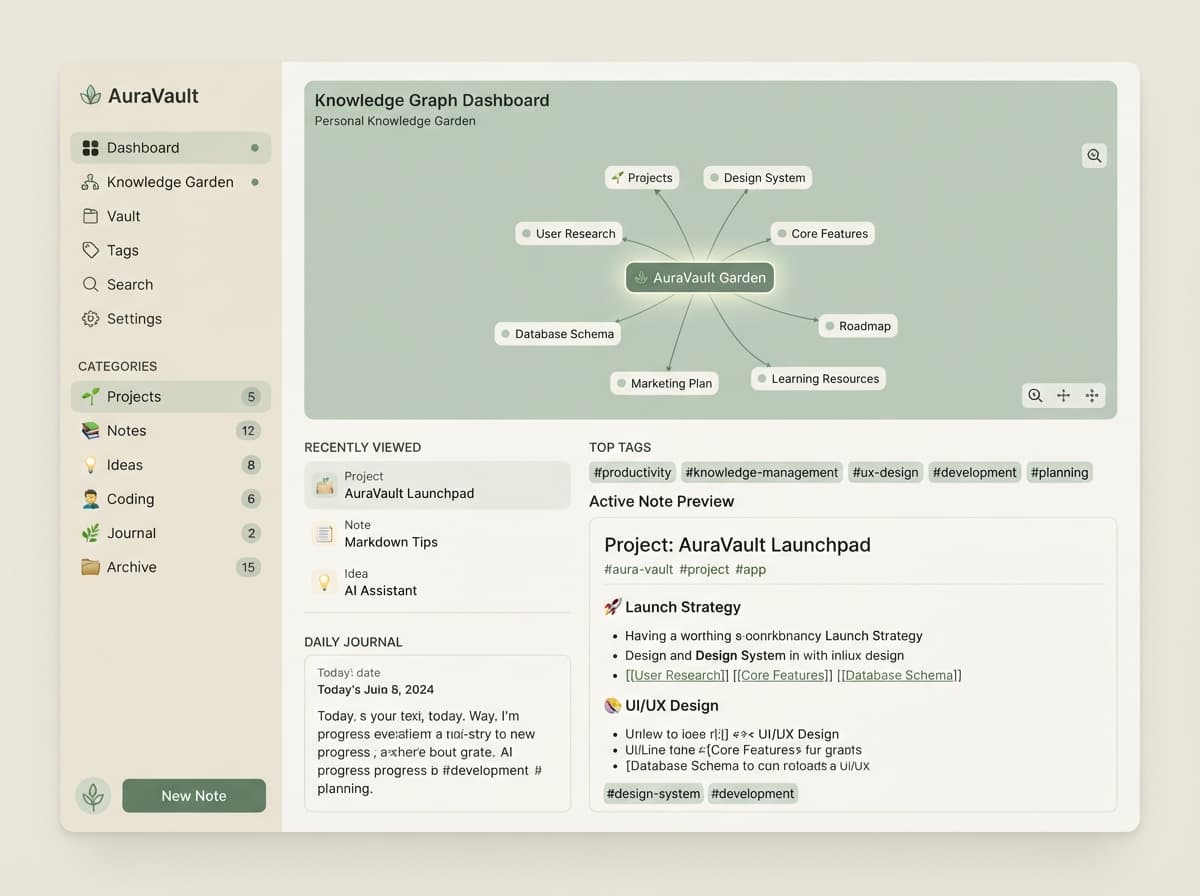
Concept
A personal knowledge system that connects notes, ideas, projects, learning topics, resources, and experiences into one interconnected visual knowledge graph.
Instead of keeping information in separate folders and documents, the system would show how different pieces of knowledge relate to each other.
The Problem
Knowledge often becomes scattered across:
- Notes
- Browser tabs
- Documents
- Bookmarks
- Projects
- Courses
- Tutorials
- Ideas
- Personal observations
The problem is not always finding information — it is understanding how different pieces of information connect.
For example, a student might learn Python, then study Machine Learning, then build a Computer Vision project. These are related, but traditional note-taking systems often store them separately.
Over time, valuable connections between ideas can easily disappear.
Possible Solution
A visual knowledge graph where every note, concept, project, resource, or idea can be connected to other related topics.
For example:
Python → NumPy → Data Science → Machine Learning → Computer Vision → Project
The system would allow users to explore these relationships visually and discover connections they may not have explicitly noticed before.
Key Features
Knowledge Nodes
Everything can become a node in the knowledge graph:
- Notes
- Concepts
- Ideas
- Projects
- Courses
- Books
- Articles
- Videos
- People
- Places
- Resources
Connections
Users can connect nodes using relationships such as related to, part of, inspired by, prerequisite for, used in, learned from, or built from.
For example:
Python → used in → Machine Learning Project
Visual Knowledge Graph
An interactive graph could let users zoom in and out, drag nodes, follow connections, open notes directly from nodes, filter by category, search the graph, and explore related topics.
Contextual Notes
Each node could contain a description, personal notes, resources, links, tags, related projects, learning status, and date created.
Project Connections
Projects could be connected directly to the knowledge that helped create them. A project such as Real-Time Gesture Control could link to OpenCV, MediaPipe, Computer Vision, Python, and Human-Computer Interaction. This creates a visual history of the knowledge behind a project.
Example Use Case
Suppose a student is learning Data Science. Their knowledge graph might connect:
Python ↓ NumPy → Pandas ↓ Data Analysis ↓ Machine Learning ↓ Computer Vision ↓ Gesture Control Project
Clicking on any node could reveal related notes, resources, projects, and learning materials.
Over time, the graph becomes a visual representation of the user's learning journey.
Future Possibilities
The system could eventually include:
- AI-powered automatic connections
- Semantic search
- AI-generated summaries
- Automatic topic extraction
- Knowledge recommendations
- Graph-based learning paths
- Spaced repetition
- Personal research assistant
- Browser extension for saving knowledge
- Markdown support
- PDF/document import
- GitHub integration
- Cloud synchronization
- Collaborative knowledge graphs
- Timeline view of learning
- AI detection of knowledge gaps
MVP
The first version could include:
- User authentication
- Create/edit/delete notes
- Create knowledge nodes
- Add tags
- Create relationships between nodes
- Search
- Basic graph visualization
- Node details
- Project linking
- Resource links
Core Idea
A visual second brain that connects what you learn, build, discover, and think about — turning scattered information into an interconnected map of personal knowledge.